
Hope and Healing for Children and Adolescents through C.O.O.L. (Children Overcoming the Obstacles in Life)

By Billie Wade, guest writer and PrairieFire graduate
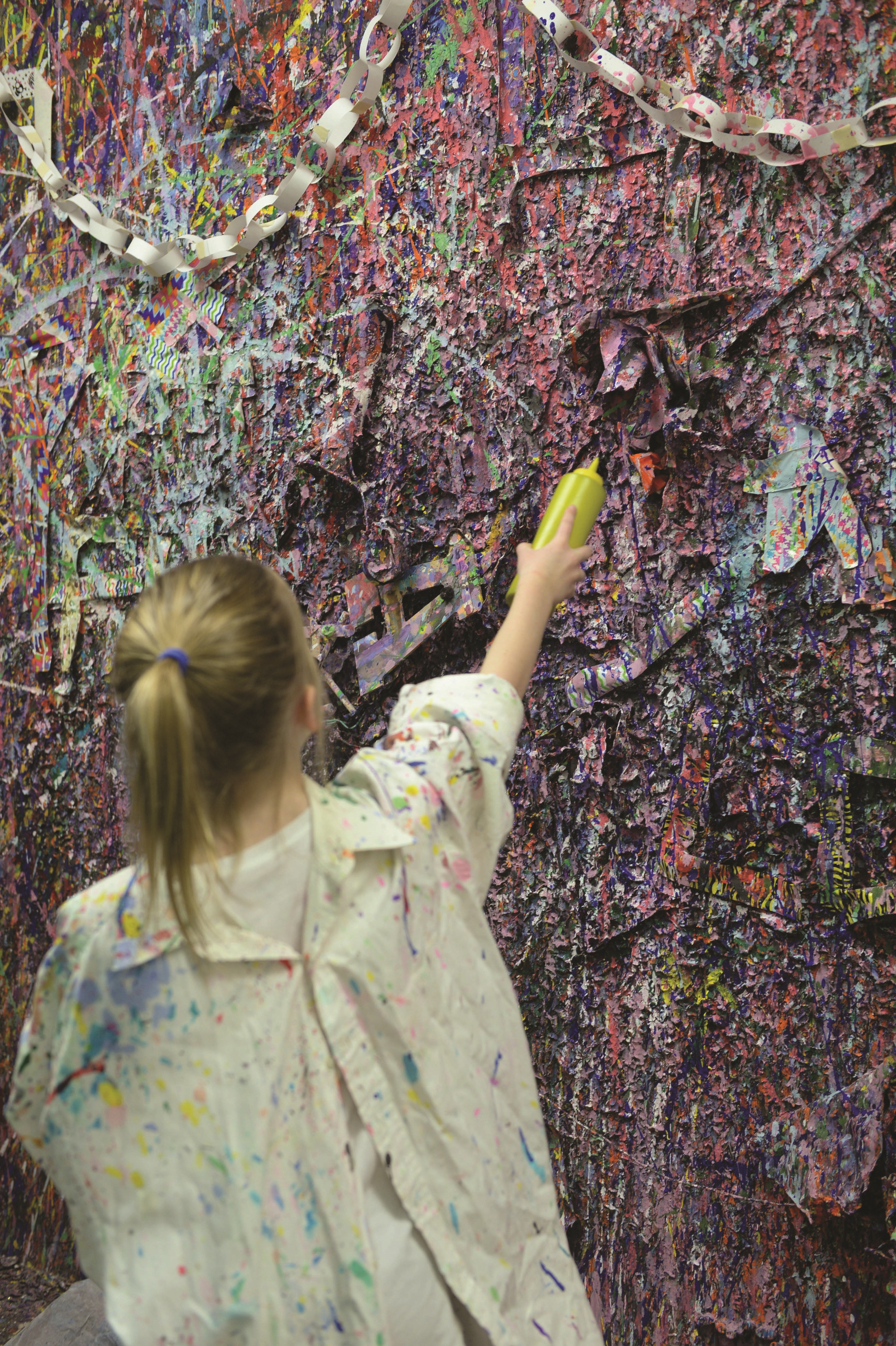
The Paint Wall is a signature aspect of C.O.O.L. Children and teens express their feelings by flinging paint, facilitated by a licensed therapist. photo courtesy of: Business Publications Corp.

September heralds the end of summer, cooler weather, shorter days, and the annual exodus to school. It’s time for students of all ages to head for the classroom. From kindergarten through adult learner, going to school can be a time of joy and excitement or a time of apprehension and trepidation. Students entering school for the first time or going to a new school may have some uneasiness and fear of the unknown. Students returning to school may feel a sense of exhilaration or a sense of dread. Parents see their children off to school feeling a host of emotions ranging from fear to relief.

Years ago, I read that children are not miniature adults. Children have stressors adults may not understand. Parents and teachers may be in a quandary about how to help and feel overwhelmed with the challenges of children in addition to those they already experience. A stressed-out parent still must pay the bills, put food on the table, and quite possibly maintain a job. A stretched teacher still must develop lesson plans, create tests, teach the class, and maintain a learning environment for all students. Growing up and learning how to interact with others is hard. Children need the adults in their environment to model civil behavior. When the adults misread or do not understand a child’s perspective, problems can arise.

Sara Swansen, and Grace Sherer, former clinicians at Des Moines Pastoral Counseling Center, recognized the mental health needs of children and their families and created a specialized clinical approach within the Center called C.O.O.L., Children Overcoming the Obstacles of Life. They believed in children’s abilities to thrive, given a fertile environment. Since December 1999, the experiential program has helped thousands of children, 645 in 2017. C.O.O.L. aims to help children, adolescents, and their families navigate the murky waters of life’s challenges. C.O.O.L. meets children at eye-level with age- and developmentally-appropriate activities and services. Kelli Hill, Ph.D., director of clinical services and one of six clinicians facilitating the C.O.O.L. program, said,” “The C.O.O.L. waiting room and wing of the Center is designed specifically to help children and adolescents feel comfortable being here.”

Dr. Hill said children come to C.O.O.L. in varying stages of mental health and for sundry reasons, including divorce, separation in impending divorce, abuse and trauma, attachment concerns, bullying, life decisions, anxiety, and depression. When life stressors pile on, children respond in myriad ways including poor study habits and the resulting grades; withdrawal from family members, teachers, and classmates; anxiety; depression; low self-esteem; substance abuse; and, inappropriate behavior, Dr. Hill said. C.O.O.L.’s clinicians work with children ages two through college-age and assessment and evaluation services are available to children of all ages, even younger than two. Sometimes, siblings participate in C.O.O.L. and may see the same clinician or a different one. C.O.O.L. works through the child’s strengths and perspective, relying heavily on age-appropriate “play, art, music, literature, the outdoors and physical movement” in a highly spontaneous and creative environment. Dr. Hill shared with me that some children refer to the Center as their second home. Children usually attend the program biweekly, and more often if necessary. Clinicians customize the program to the unique needs of each child and her or his family. Some activities focus on the child and others focus on interactions with their families.

Dr. Hill told me bullying is a big problem in schools and can follow students through several school years. Social media has changed the landscape of bullying. No longer confined to recess, gym class, the school bus, and the walk to and from school, the harassment and torment invade children’s’ sanctuaries—their homes. Bullies now can Tweet, text, post, and email damaging messages to large numbers of people simultaneously. Usernames allow them to carry out their hurtful behavior in anonymity.

I loved school and learning, but my experiences there were not always pleasant. Shy, soft-spoken, and overweight, from an alcoholic, abusive family, I was bullied through fifth and sixth grades and junior high school. My parents were ill-equipped to address what I experienced. My father demanded good grades and grounded us for anything less than an “A.” My mother demanded good behavior and a trip to the principal’s office for her meant grounding for us, regardless of who was at fault. Fortunately, my brother, sister, and I rarely wound up in the principal’s office. My father grounded us for not fighting; my mother grounded us for fighting. Thirty-two years later, as a single parent, I was ill-equipped to help my son as he faced teacher-supported bullying. When he reported offenses to teachers, they accused him of being a trouble-maker or tattling. School administrators surprised me by making excuses for the bullies while blaming my son. Punishment for my son often exceeded that of the bully’s. Bullies tormented him through elementary, middle, and high school. I spent several afternoons in principals’ offices defending my son after a bully or a group of bullies attacked him.
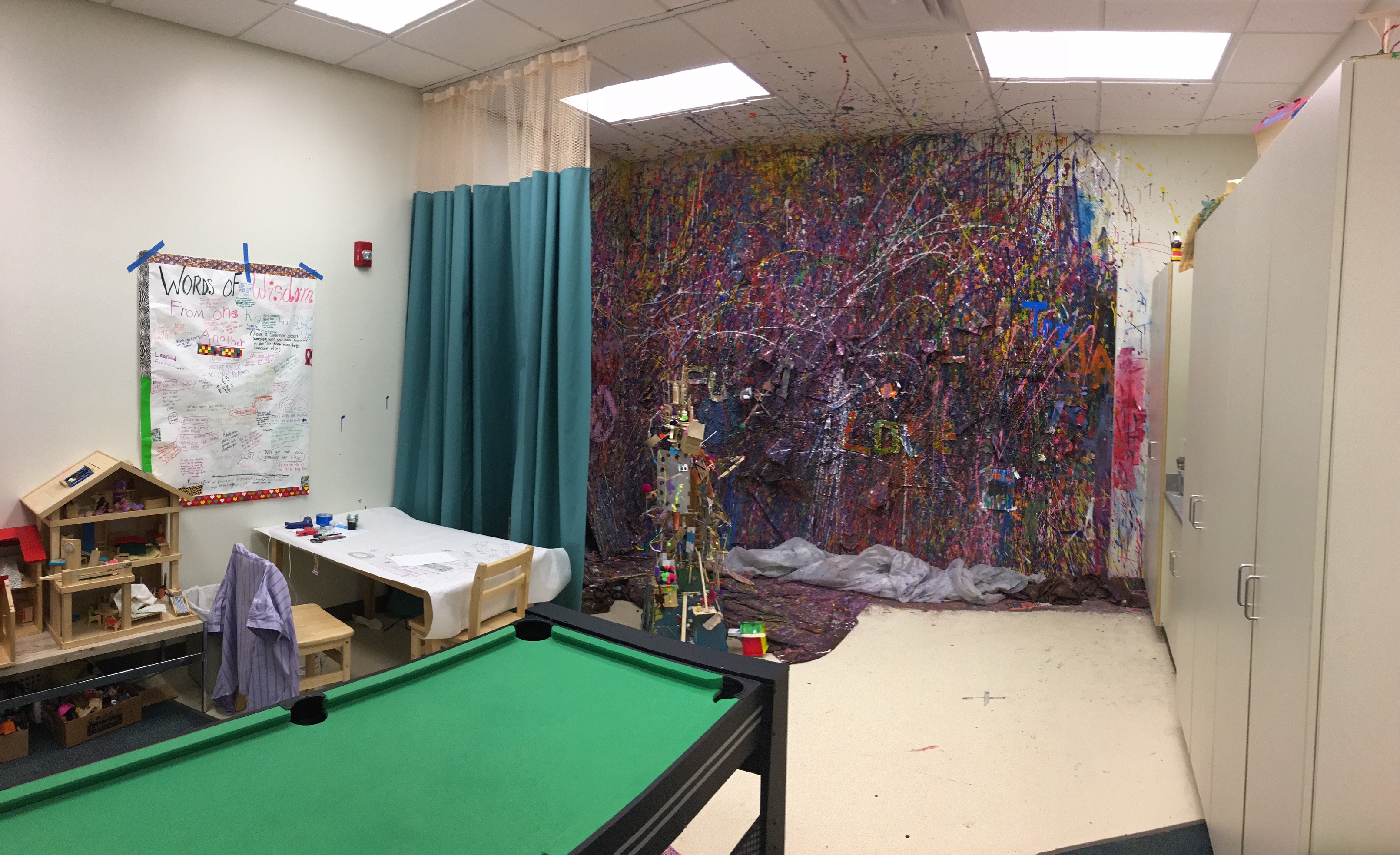
Art and activity room for C.O.O.L. clients.

The holistic approach of the C.O.O.L. program reaches beyond a child’s need for physical safety to psychological and emotional safety. Children learn personal limits and gain confidence in their evolving bodies and identities. Finding the balance between giving a child too much rein and not enough can baffle adults. C.O.O.L.’s staff are there to bolster the parents and families as well as the child. They encourage children to explore and trust themselves, and they encourage parents to trust their child’s autonomy.

Dr. Hill said, “I get to come to work every day and watch the amazing growth and development of young people. I have a great opportunity to serve children and their families. We at C.O.O.L. feel blessed and honored to be on the journey of hope and healing with the children and adolescents.”

C.O.O.L. is a dynamic intervention for children and their families. Participants receive the support system and guidance that is so crucial to their development and their ability to engage fully in life’s opportunities and to face life’s challenges with confidence and courage. For more information about C.O.O.L. please visit www.dmpcc.org/COOL. To start the process to schedule an appointment for your child or adolescent, please visit www.dmpcc.org or call 515-274-4006.
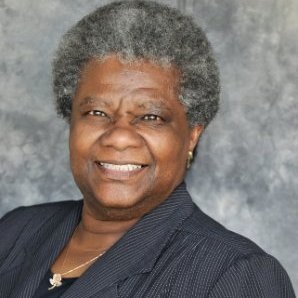
Billie Wade, writer

Billie Wade is a gregarious introvert whose primary interests are writing, lifelong learning, personal development, and how we all are affected by life’s vagaries. Issues facing black people, women, the LGBTQ community, and aging adults are of particular concern to her. She enjoys open-hearted dialogue with diverse people. The opinions expressed here are her own.

To read more of Billie’s blogs: www.dmpcc.org/Billie

A reflection on choices

by Billie Wade, guest writer

Billie Wade, writer

Choice is a freedom we all have and exercise multiple times in a typical day—how we want to spend our time, who we want to interact with, what we want to watch on television. Periodically, larger issues arise—where we want to live, what kind of career we want, this person is or is not a good mate for me.

Choice is a supreme gift that we do not always recognize. Seeking help when we do not know what else to do is a choice. Sharing our story is a choice. Greeting each day with a sense of awe and appreciation is a choice, even if our circumstances are dire.

There is much in life over which we have no control. We may be facing serious difficulties with dire implications. Where is our choice there? The answer is that we are always one hundred per cent at choice about our attitude regardless of our situation or what is happening around us. The attitude we choose dictates our feelings and actions.

December 20, 2017, I received the crushing diagnosis of breast cancer. In the statement of two words, “It’s cancer,” my world shattered. I sat in stunned silence, not hearing anything else the nurse navigator said. I wondered how it could have happened, although I knew I was a prime candidate because cancer ran in my immediate family. Despite my journaling practice, I wrote very little that day. Cancer was too big. I could not grasp it. It was huge and electrified. I entered a world where I had no control. It seemed that all I could do was follow the instructions of my burgeoning medical team and hope for the best. I felt numb and hollow. I wanted the cancer out of my body, but I did not like what I had to go through for that to happen.

In the days before surgery, I experienced crushing fear. The future no longer existed for me. I felt somehow cheated out of life by some cruel cosmic joke. I grappled for something, anything, I could control. I paid my bills on time. I balanced my checkbook. I got dressed every morning. I talked to my family, friends, and my counselor at the Center. I shared my experience on social media at significant milestones. I wrote in my journal and worked on my writing projects. I controlled my response to what was happening, after the numbness of shock wore off.

In the days immediately following the January 31 surgery, I learned that the “cell margins” and lymph nodes were clear. When I received those lab results I began to decompress. I began to believe I would be okay. I began to see possibilities for favorable outcomes. I began to breathe. But, I still did not see my choices. My movements seemed mechanical.

My surgeon’s nurse told me that I had found the tumor at the earliest possible stage and that my surgeon thought my treatment regimen would involve only radiation. A couple of weeks later, my oncologist confirmed that I did not need chemotherapy. Following thirty-three radiation treatments over a period of six and a half weeks, I looked back on the previous five months and realized how many choices were at my disposal and how many choices I had made.

As you go through a typical day, jot down in a notebook the number of choices you make and how you feel about them. They can be as broad as “went for a walk” or as detailed as “stood up from my chair, walked to the kitchen, removed a glass from the cupboard, walked to the kitchen sink, turned on the water, filled the glass, walked back to my chair, sat down, etc.” Each of those steps involved a choice. You may be surprised by how many options you have. You may feel better equipped to face choices when adversity arises. Choice contributes to feelings of well-being because we have the freedom to make important decisions about our lives. It promotes feelings of contentment, inner strength, and empowerment.

Choice has a companion: responsibility. We have a responsibility to make choices that serve the good of everyone involved in our situation. We sometimes make a choice that does not serve us. At times, the consequences of our choices are painful and may limit future choices.

Having choices doesn’t mean we will like and embrace the options available to us. We may have to choose among two or more possibilities we would prefer to avoid. During these times, we can reach out to trusted people to be with us through the turmoil. We can talk to people we trust and engage in soothing, nurturing spiritual practices.

Sometimes, we are met with so many choices that they feel overwhelming. We need to give ourselves as much time and space as possible to weigh all the options and make an informed decision.

The right to choose is bestowed upon all human beings. We have the right to choose how we feel about what happens in our life. We have the right to choose our attitude even in adversity. We have the right to choose how we respond to the forces of life. As your days unfold, may the freedom of choice comfort and energize you. Make time in your day to appreciate the power of choice in your life.

Billie Wade is a gregarious introvert whose primary interests are writing, lifelong learning, personal development, and how we all are affected by life’s vagaries. Issues facing black people, women, the LGBTQ community, and aging adults are of particular concern to her. She enjoys open-hearted dialogue with diverse people. The opinions expressed here are her own.

The Healing Benefits of Journaling

Some people see or hear the word “journaling” and flee for the hills. Others are intrigued but not sure they’re ready to take the step. Others are neutral, unaffected by encouragement to keep a journal. I am in the camp of avid journalers and have been since age twelve. Throughout the years, my journaling ebbed and flowed, depending on my life circumstances. Most recently, I have journaled steadily since September 8, 2002, and journaling is a daily priority.

Journaling is one of the best ways to explore emotions and feelings, sort through events and relationships, and grow as a person. It moves issues out of my head and onto the page where I can take an objective look at a situation. My journal is my closest friend. I write thoughts and feelings that I cannot express to other people. I learn about who I am, what I want from life, and strategies for solving or managing problems. Difficult emotions and painful aspects of my life challenge me on the page. Journaling supports and sustains me between counseling sessions. I often journal about a session or discuss an entry in counseling.

Journaling requires no special writing skills or costly equipment and has no penmanship rules. You can write anything you choose without attention to grammar, punctuation, or word choices. Write diagonally on the page, upside down, and in the margins. Experiment writing with your non-dominate hand. Make your journal a place to express who you are.

There are probably as many types of journaling as there are people who have a journaling practice. I have identified six basic types:

1. Introspective—an exploration of thoughts and feelings about specific topics or life in general;
2. Reflective—a thoughtful look at experiences and meaningful events;
3. Situational—an examination of one specific event or experience;
4. Gratitude—a collection of those aspects of life that bring joy and thankfulness;
5. Dream—often a rich source of symbols and messages that enhance all of one’s life; and,
6. Spiritual—an introspective or reflective approach to one’s experience of reverence however that is defined in each person’s life. You may want to read books about journaling or research online for articles on types of journaling. I keep all my journal entries together in one series of books whereas some people prefer to maintain a separate book for each of their journaling categories.

When I sit down to journal, I write the day, date, and time of the entry. For subsequent entries on the same day, I record only the time. I write at various points in my day, but some people have a dedicated period. How much I journal varies from a paragraph one day to ten pages the next. Numbering pages helps me when I reread my entries. While daily journaling is beneficial to me, some people find it necessary only occasionally or when a special need arises. Honoring personal rhythms is important. I carry a small notebook with me to jot down journaling ideas when I am away from my book or unable to interrupt another activity.

As you contemplate a journaling session, consider your emotions and what is on your mind. Ask questions. What motivated you to write the entry? What is the lesson in the experience or how can you learn from it? What do you know for sure? What do you want to know more about? If you’re new to journaling, you may want to start your sentences simply—“I want…,” “I’m so angry about…,” “I wish I could…,” “I’m crying about…,” “I’m so happy about…,” etc. Describe the situation in whatever language works for you. Let your emotion fill the page. Stop when you feel relief or when no more words come. Journaling is often done to facilitate emotional healing. Out of the pain comes insight, epiphany, and transformation. But, you also can celebrate the joys of your life in your journal. Happy events can be powerful catalysts for healing.

Your journal may be as simple or elaborate as you choose. You can use anything from scratch pads and wire-bound notebooks to hand-bound leather journals that store in their own box. They come with a variety of beautiful covers and either lined or unlined pages in a variety of colors. Some journals feature quotes or inspirational messages at the top of each page or attractive page borders. To find journals you may want to try, visit bookstores, drug stores, and office supply stores. They also are available from online retailers, but you miss the opportunity to examine before you buy.

Personalizing a journal is easy. I use writeable stick-on index tabs on the tops of pages of special entries I want to remember. I use different ink colors to color-code my entries and enliven my journal and journaling experience. I print or cut out quotes, glue them into my journal, and reflect on them. I save magazine and online articles and blog posts. Some people save movie tickets and other memorabilia. Some people draw or sketch in their journal or write poetry. Colorful shoelaces make fun bookmarks. When you finish a book, move the shoelace to the next book or use a different one for each book or category. I try to put “fun” into functional.

Privacy reigns supreme. Your journals are personal, and you determine how much security you need. Consider your situation and your tolerance for risk and take steps to protect your journals accordingly. Recognizing your comfort level and deciding how you will protect your writing early on in your journaling practice is often easier than trying to institute a system after a security breach. While I am a strong proponent of hand-written journals, you may find a password-protected online journal or document on your computer more suitable. Online, you can choose from several free and premium options. Some people publish their journaling as a memoir while others make provisions in their will to protect their writing. Be wary of anyone who tries to coerce you into destroying your journaling. Make sure it is what you want to do. If someone reads your journaling without your permission, seek ways to protect yourself and your writing in the future.

Whatever your comfort level, I hope you decide to try journaling, perhaps committing to a month, week, or a specified number of entries. You may even want to start with journaling about your feelings about journaling. You may be pleased with the insights you uncover and the epiphanies you experience. May journaling be as comforting, challenging, rewarding, and empowering for you as it is for me.

Happy writing to you.

Billie Wade, writer

Billie Wade is a gregarious introvert whose primary interests are writing, lifelong learning, personal development, and how we all are affected by life’s vagaries. Issues facing black people, women, the LGBTQ community, and aging adults are of particular concern to her. She enjoys open-hearted dialogue with diverse people. The opinions expressed here are her own.